Karachi The Sindh Solid Waste Management Board’s first biogas plant, developed to utilise Karachi’s substantial organic waste output, will commence operations on 15 December 2025, supplying low-cost cooking fuel to gas-deprived households in Clifton.
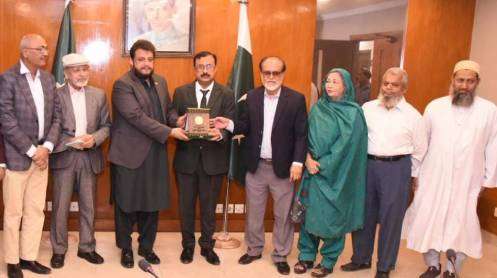
This was announced by SSWMB Managing Director, Tariq Ali Nizamani, while addressing a seminar on modern, sustainable urban waste management solutions aligned with the Sustainable Development Goals (SDGs). The event was organised by the Central Standing Committee of the Federation of Pakistan Chambers of Commerce & Industry (FPCCI) on SDGs, in collaboration with the National Forum for Environment & Health (NFEH), at the Federation House.
Nizamani said the biogas plant at Bagh Ibn-e-Qasim would process up to seven tonnes of livestock waste daily to supply fuel to nearby 70 to 80 households at a subsidised rate of Rs 2,000 per month. In its next phase, the facility will also generate electricity to help resolve longstanding lighting issues at the iconic park.
He added that another biogas plant would soon be set up at Karachi’s Cattle Colony, boosting the SSWMB’s efforts to convert the city’s substantial organic waste into energy—rather than allowing hazardous dumping into the sea, which contributes to severe marine pollution.
Mr Nizamani further disclosed that heavy vehicles transporting waste recklessly—often scattering rubbish across major roads—would soon be fined up to Rs 20,000, as the SSWMB has requested powers from the provincial government to penalise such violations and curb littering by citizens.
Highlighting the gravity of the waste crisis, he said Karachi generated more than 14,800 tonnes of solid and municipal waste daily—exceeding the levels produced in Mumbai, Delhi and Dhaka. District Central alone produces over 3,000 tonnes per day, the highest among the city’s seven districts. He noted that approximately 42 per cent of Karachi’s waste consisted of organic material that could be converted into biogas or compost through proper segregation and processing. Karachi also accounts for 25 per cent of Pakistan’s total recyclable plastic waste.
The SSWMB chief informed participants that over 13,000 workers and 2,305 vehicles were deployed across Karachi for waste collection and disposal. He added that cutting-edge technology was being used for real-time monitoring of the entire waste management chain—from household collection to designated landfill sites. A dedicated helpline, call centre and mobile application are also fully operational to receive round-the-clock complaints regarding unattended waste.
He said the World Bank-funded Solid Waste Emergency and Efficiency Project (SWEEP) was under way to modernise the city’s waste infrastructure, including new garbage transfer stations and a fully engineered sanitary landfill.
Welcoming participants, FPCCI Vice-President Aman Paracha emphasised the urgent need to roll out modern waste disposal systems, noting that unattended rubbish heaps—particularly along the railway tracks—remained a major civic concern for Karachi’s residents.
Senior environmentalist Saqib Ejaz Hussain urged the Sindh government to ensure the safe and proper disposal of the city’s enormous quantity of hospital and medical waste, warning that its illegal burning at night significantly worsened air pollution.
Speaking on behalf of the Dawoodi Bohra Community, Ali Asghar Quettawala called for a one-window operation in Karachi to handle all categories of waste, including municipal, construction and sewerage waste.
The Convener of the FPCCI Standing Committee, Naeem Qureshi, appealed to the Sindh government to allocate greater financial and logistical support to the SSWMB and other civic agencies to strengthen Karachi’s waste management systems.
Climate activist, Ahmed Shabbar, called for launching a broad-based awareness drive to ensure that the citizens actively take part in the campaign to make Karachi clean and green.
NFEH Secretary-General Ruqiya Naeem and Vice-President Engineer Nadeem Ashraf urged the SSWMB to improve and accelerate waste collection from dustbins placed near residential neighbourhoods across the city. Late, the Standing Committee members also visited the upcoming biogas plant of the SSWMB.
SSWMB’s first biogas plants to energize Clifton kitchens from 15 Dec, *FPCCI panel briefed